
"An intellectual serving political emancipation."
A recognized intellectual
Professor of political science, Jimmy Yab is recognized as "an eminent figure in the field of international relations." Holder of a PhD in political science, he teaches at the Institute of International Relations of Cameroon (IRIC) and also intervenes internationally – he notably held the prestigious position of Dongfang Scholar at Peking University and taught as a visiting professor at the University of Southampton. Founder and president of the China-Francophone Africa Observatory (OCAF) and the China-Cameroon Friendship Association, he has built academic and cultural bridges between Francophone Africa and Asia. His work focuses primarily on development policies in East Asia and Africa, and his book Introduction to China-Africa International Relations is now considered a major reference in this field.
Beyond his academic functions, Jimmy Yab has authored numerous influential articles and studies on development. His career combines scientific rigor and a sense of pedagogy: he conceives research as a concrete lever for social transformation. This is evidenced by his open letters and analyses on development that propose detailed solutions to strengthen governance and public services in Cameroon and Sub-Saharan Africa. This dual role as researcher and educator reinforces his credibility: as the official presentation notes, he embodies "recognized academic expertise" associated with "visionary leadership.
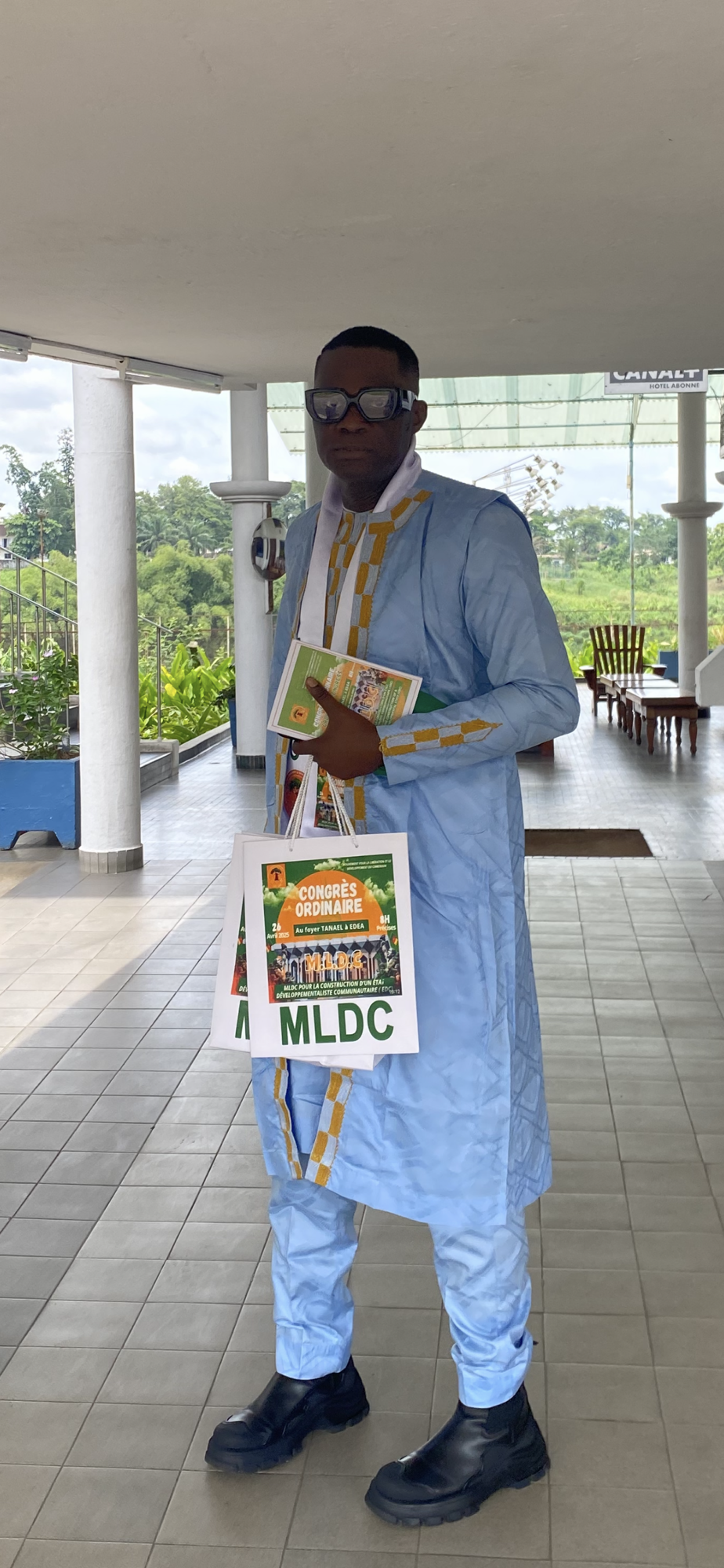
Commitment to social justice and popular sovereignty
Since his beginnings, Jimmy Yab has carried a long-standing political commitment based on social justice, popular sovereignty, and the dignity of the African continent. In his writings as in his speeches, he constantly reminds that the development of Cameroon must put people at the center, fight against inequalities, and give back to the people the power to decide. At the MLDC, the renewal driven by his election has "allowed for an activity review, the renewal of governing bodies" and placed the values of justice and sovereignty at the heart of the party's project. Indeed, the advent of Jimmy Yab at the head of the MLDC is perceived as a generational turning point "in search of social justice, sovereignty, and dignity.
His vision of political change is resolutely pan-African and solidarity-based. He advocates for a "Community Developmentalist State" that refounds the Republic on the basis of popular sovereignty and endogenous development. This approach integrates the lessons of Asian successes while valuing African know-how. Professor Yab emphasizes that true change will not come from a simple alternation of people, but from a "new social contract, based on popular sovereignty." He also advocates for a more united and autonomous Africa: in his perspective, Cameroon must be part of "a strong, integrated, and sovereign Africa" to achieve its development[9]. Furthermore, he emphasizes the participation of youth and the diaspora – which he considers a driving force for mobilization and financing – as well as equitable access to basic services (health, education, water) for all.
A strategic role within the MLDC
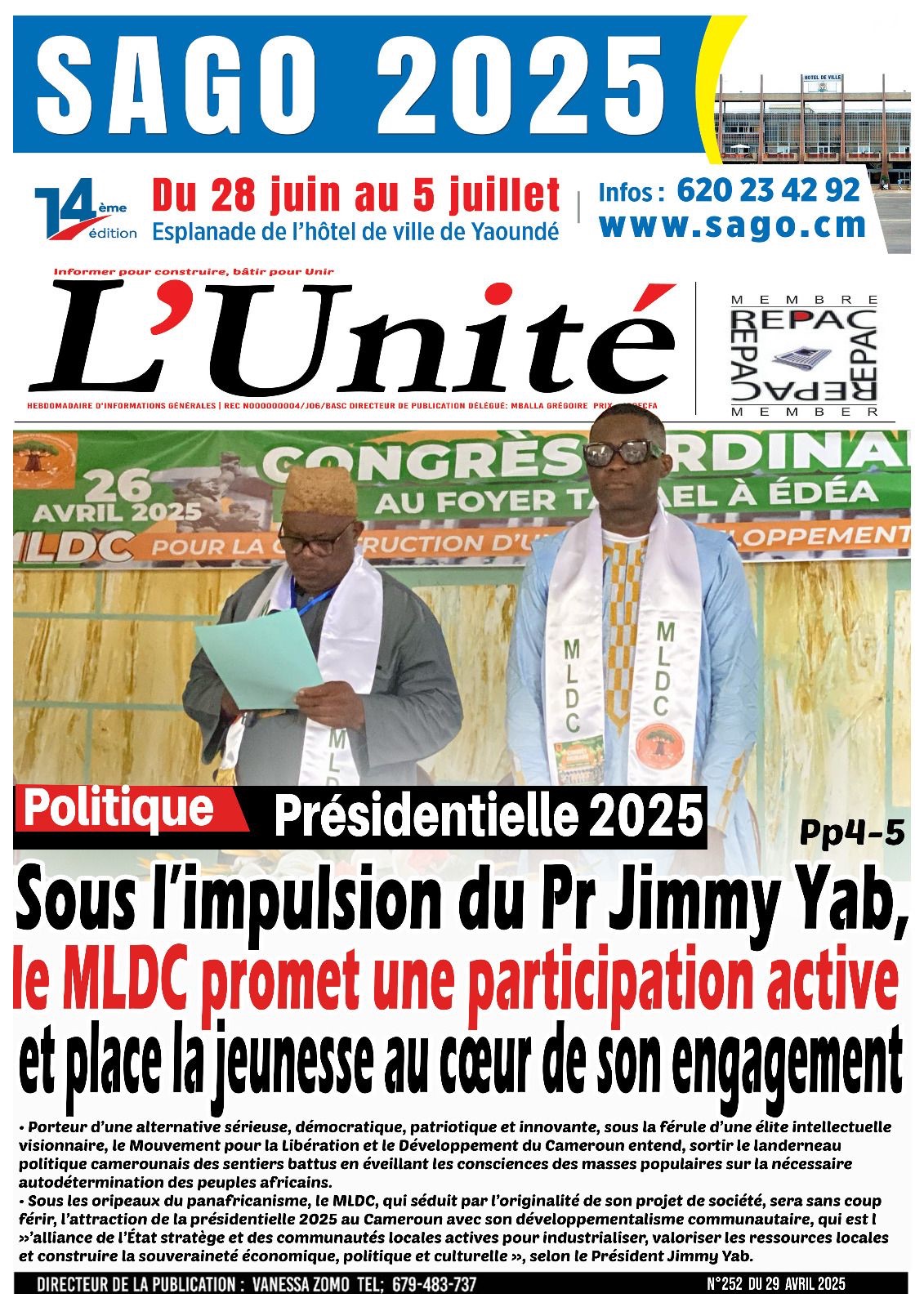
A long-standing member of the Movement for the Liberation and Development of Cameroon (MLDC), Jimmy Yab has taken on increasing responsibilities within the party. Following the political meeting of April 2024, he was appointed Secretary General of the MLDC, a position he holds with energy and diligence. At the ordinary congress on April 26, 2025, in Édéa, he was elected National President of the party, uniting the agreement of militants and embodying "fidelity to past struggles" while bringing necessary "ideological innovation." This transition marked a true strategic turning point: under his leadership, the MLDC is no longer a party of passive opposition but a movement of alternation carrying a counter-political model. He oriented the MLDC's program towards institutional refoundation – notably through a project of developmentalist federalism in four regions – and the rehabilitation of popular sovereignty as the foundation of the State.
Through his action, Jimmy Yab has contributed to clarifying the MLDC's ideology. He insists on the need to build an alternative national narrative, where the State serves the development of local communities and not private interests. In his conferences and articles, he explains this vision and mobilizes the party around a concrete program (with, for example, ten detailed transition priorities for 2025). His responsibility as a political strategist is unanimously praised by militants: as one observer points out, his election as "National President of the MLDC embodies the transition from one generation to another" and gives the party a credible "global alternative project" for the country.
A pan-African vision for an autonomous and united Cameroon
Jimmy Yab's project is not limited to Cameroonian borders. It is part of a pan-African perspective of South-South cooperation. He advocates for the establishment of strategic regional alliances (notably a "Cameroon–Nigeria axis" to develop commercial and industrial exchanges), in order to restore the "economic sovereignty" of African countries and enable them to negotiate as equals in the world. He believes that each country must regain its autonomy and democratic integrity before contributing to continental solidarity. This economic diplomacy for Africa is reflected in his "Community Developmentalist State" model, conceived as a framework for action at national and continental levels.
At the same time, Professor Yab emphasizes the construction of civic consciousness through education. Within the MLDC, he organizes citizen forums and civic education programs for young people, to "break political fatalism and restore confidence in the people." He sees popular education as a tool for mobilization and rallying: he is a "pedagogue of change," who knows how to translate complex concepts into concrete proposals accessible to the general public. His ability to articulate scholarly discourse and the everyday language of the militant makes it possible to unite broad segments of society around the party's values.
A committed intellectual and a unifying leader
Beyond his thought, Professor Jimmy Yab is particularly appreciated for his human qualities and his leadership style. His peers emphasize that he combines the academic rigor of a researcher with the ardor of a grassroots activist. He is described as a "figure of Cameroonian intellectual and militant youth," capable of dialoguing with both academic elites and ordinary citizens. His communication approach is "offensive and pedagogical," prioritizing basic political education: he multiplies regional trips, public debates, and popularized publications to explain the MLDC's vision and rally energies around it.
A convincing unifier, Jimmy Yab knows how to build bridges between generations and political sensibilities. He has notably modernized the party's structures by creating democratic local coordinations and valuing the place of women, youth, and the diaspora in the governing bodies. A shrewd strategist, he designs realistic electoral campaigns and a budgeted program that reassures potential partners. Finally, a passionate pedagogue, he makes it a point of honor to "debate concrete solutions" for the country.
In short, Professor Jimmy Yab embodies a rare synthesis: he is both an erudite intellectual and a committed activist. His scientific stature, internationally recognized, gives him considerable credibility with voters and decision-makers, while his militant roots in the MLDC guarantee him legitimacy and empathy in the neighborhoods. His career and personality inspire respect and trust: as his official website notes, he combines "exceptional academic excellence" and "deep commitment to societal progress." By choosing Jimmy Yab, the MLDC thus highlights a visionary, unifying, and rigorous leader, capable of leading Cameroon towards a new era of autonomy and justice for all.